
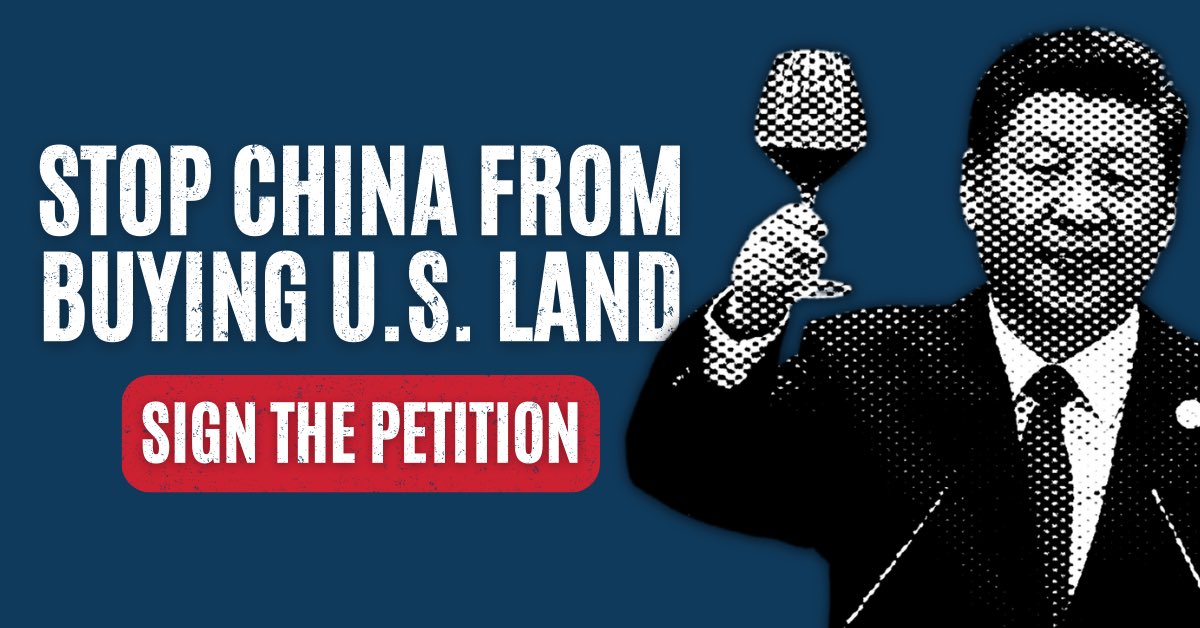

The statement is a call to action against the perceived threat of a foreign nation, in this case, China, buying land in the United States. It expresses a strong nationalistic sentiment and urges people to sign a petition to protect American sovereignty. The tone is urgent and somewhat alarmist, aiming to rally support for the cause. The image accompanying the statement features a graphic with the text 'STOP CHINA FROM BUYING U.S. LAND' and 'SIGN THE PETITION', along with a stylized depiction of a person holding a gavel, which suggests a call for authoritative action.
- The statement could be seen as promoting a nationalistic viewpoint, which may not necessarily cause harm but could contribute to a divisive atmosphere if not presented with factual accuracy and respect for international relations. [-1]Principle 1:I will strive to do no harm with my words and actions.
- The statement respects the privacy and dignity of individuals by not targeting any specific person, but it could be interpreted as lacking respect for the dignity of a nation or its people. [-1]Principle 2:I will respect the privacy and dignity of others and will not engage in cyberbullying, harassment, or hate speech.
- The statement does not promote understanding or empathy towards the foreign nation mentioned, potentially fostering an 'us vs. them' mentality. [-1]Principle 4:I will engage in constructive criticism and dialogue with those in disagreement and will not engage in personal attacks or ad hominem arguments.
- The call to action could be seen as using influence to address a concern about national sovereignty, but it may not be contributing to the betterment of society if it leads to increased tension between nations.Principle 6:I will use my influence for the betterment of society.
- The statement uses the platform to express a viewpoint, but it may not be upholding the principles of free speech if it discourages open dialogue about the complexities of international property ownership. [-1]Principle 7:I will uphold the principles of free speech and use my platform responsibly and with integrity.