
Kevin Bass PhD MS
@kevinnbass
·
735d
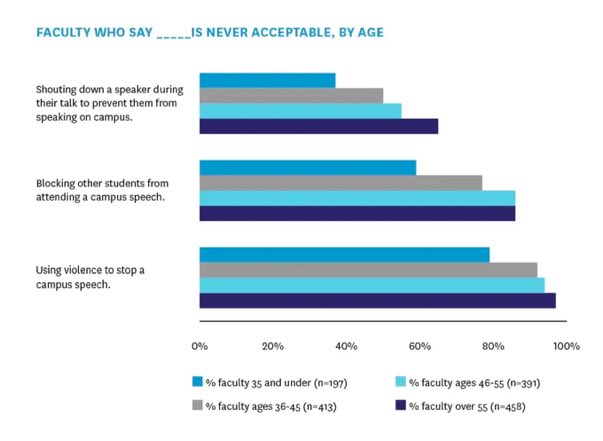

The statement expresses concern about the attitudes of young academics towards free speech, specifically in the context of the 'heckler's veto,' which is the act of silencing a speaker through disruption rather than dialogue. The tone is critical and implies a negative view of the acceptance of such tactics among younger faculty members. The image provided is a bar chart showing the percentage of faculty by age group who believe that certain actions to prevent speech are never acceptable. The chart is used to support the statement by illustrating the differences in opinion among age groups regarding free speech on campus.
- The statement is critical but does not cause harm with words or actions. [+1]Principle 1:I will strive to do no harm with my words and actions.
- The statement promotes understanding of the speaker's perspective on free speech and academic attitudes but does not necessarily foster empathy or compassion towards those with differing views.Principle 4:I will engage in constructive criticism and dialogue with those in disagreement and will not engage in personal attacks or ad hominem arguments.
- The statement uses influence to highlight concerns about the direction of academia and the potential implications for society. [+1]Principle 6:I will use my influence for the betterment of society.
- The statement upholds the principle of free speech by criticizing actions that could suppress it, but it could be seen as not fully engaging with the complexity of the issue.Principle 7:I will uphold the principles of free speech and use my platform responsibly and with integrity.