

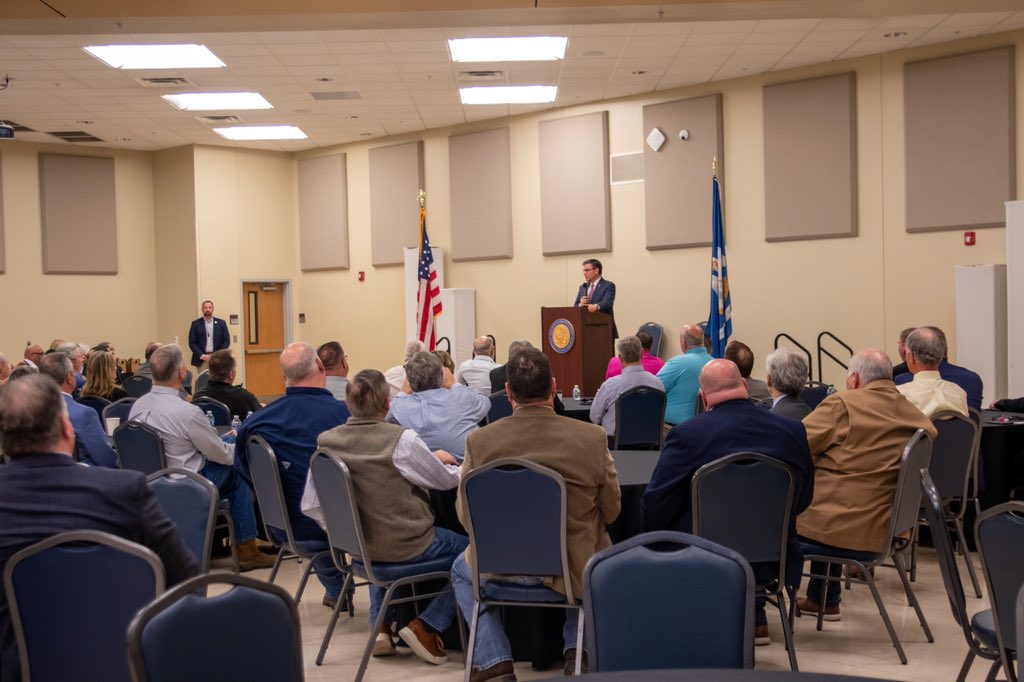

The statement reflects a public figure's engagement with community leaders to discuss regional and national concerns, specifically highlighting the issue at the southern border as a primary concern. The tone is informative and suggests a willingness to listen to constituents' concerns.
- The statement indicates an effort to understand and address community concerns, aligning with the principle of doing no harm with words and actions. [+1]Principle 1:I will strive to do no harm with my words and actions.
- The statement respects the privacy and dignity of others by not disclosing specific personal details or engaging in negative discourse. [+1]Principle 2:I will respect the privacy and dignity of others and will not engage in cyberbullying, harassment, or hate speech.
- The statement does not contain any language that would constitute cyberbullying, harassment, or hate speech. [+1]Principle 3:I will use my words and actions to promote understanding, empathy, and compassion.
- The statement promotes understanding by acknowledging the concerns of community leaders and implies a willingness to engage in dialogue about these concerns. [+1]Principle 4:I will engage in constructive criticism and dialogue with those in disagreement and will not engage in personal attacks or ad hominem arguments.
- The statement does not present an opportunity for constructive criticism or dialogue with those in disagreement, as it is a report of a meeting rather than an argument or debate.Principle 5:I will acknowledge and correct my mistakes.
- There is no indication of a mistake being made or corrected in the statement.Principle 6:I will use my influence for the betterment of society.
- The statement uses the speaker's platform to inform the public about their engagement with community issues, which can be seen as using influence for the betterment of society. [+1]Principle 7:I will uphold the principles of free speech and use my platform responsibly and with integrity.