

In reply to:
Matt Taibbi
@mtaibbi
·
617d

Matt Taibbi
@mtaibbi
·
617d
Matt Taibbi
@mtaibbi
·
617d
Matt Taibbi
@mtaibbi
·
617d

Matt Taibbi
@mtaibbi
·
617d


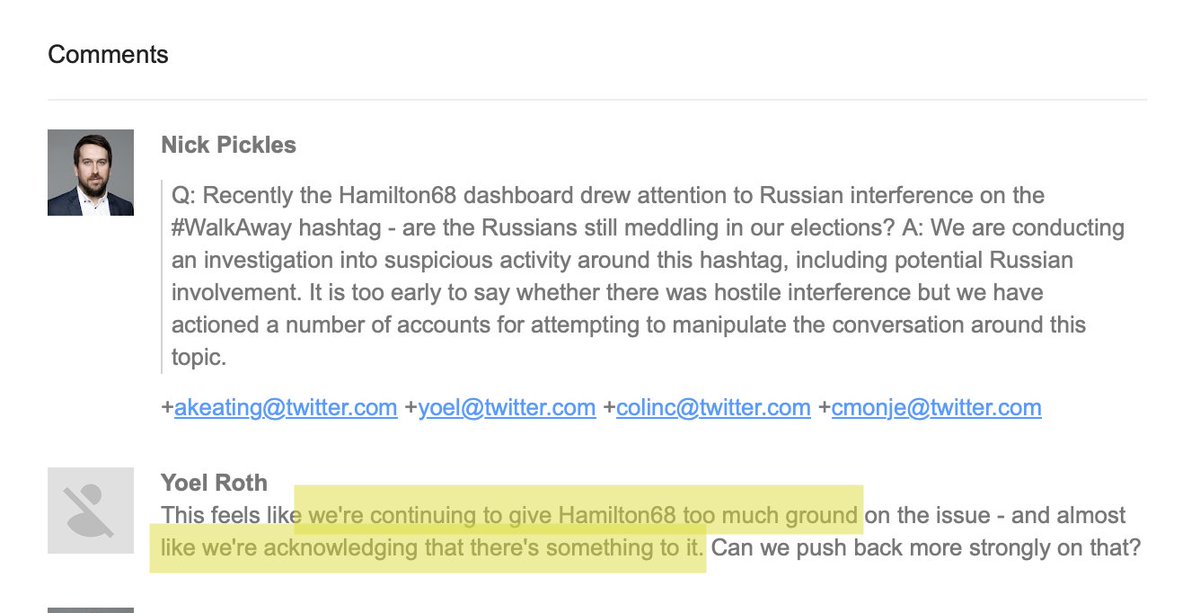
The statement and accompanying images discuss internal communications among Twitter executives regarding the Hamilton 68 dashboard and its claims of Russian interference in social media hashtags. The content touches on issues of transparency, misinformation, and the relationship between social media companies and government entities.
- The statement and images suggest an effort to correct misinformation, which aligns with the principle of striving to do no harm with words and actions. However, the private nature of the communications and the suggestion to maintain relationships privately could be seen as lacking full transparency. [+1]Principle 1:I will strive to do no harm with my words and actions.
- The communications respect the privacy and dignity of others by not engaging in cyberbullying, harassment, or hate speech. However, the internal nature of the discussions and the suggestion to handle matters privately may raise questions about the transparency of the process.Principle 2:I will respect the privacy and dignity of others and will not engage in cyberbullying, harassment, or hate speech.
- The intent to correct misinformation and promote accurate information aligns with promoting understanding, empathy, and compassion. However, the private handling of the situation may not fully promote public understanding. [+1]Principle 3:I will use my words and actions to promote understanding, empathy, and compassion.
- The internal communications show a willingness to engage in constructive dialogue and avoid personal attacks, adhering to the principle of constructive criticism and dialogue. [+1]Principle 4:I will engage in constructive criticism and dialogue with those in disagreement and will not engage in personal attacks or ad hominem arguments.
- The discussions reflect an effort to use influence responsibly by addressing misinformation, but the private nature of the communications may limit the perceived integrity and transparency of the actions.Principle 6:I will use my influence for the betterment of society.