
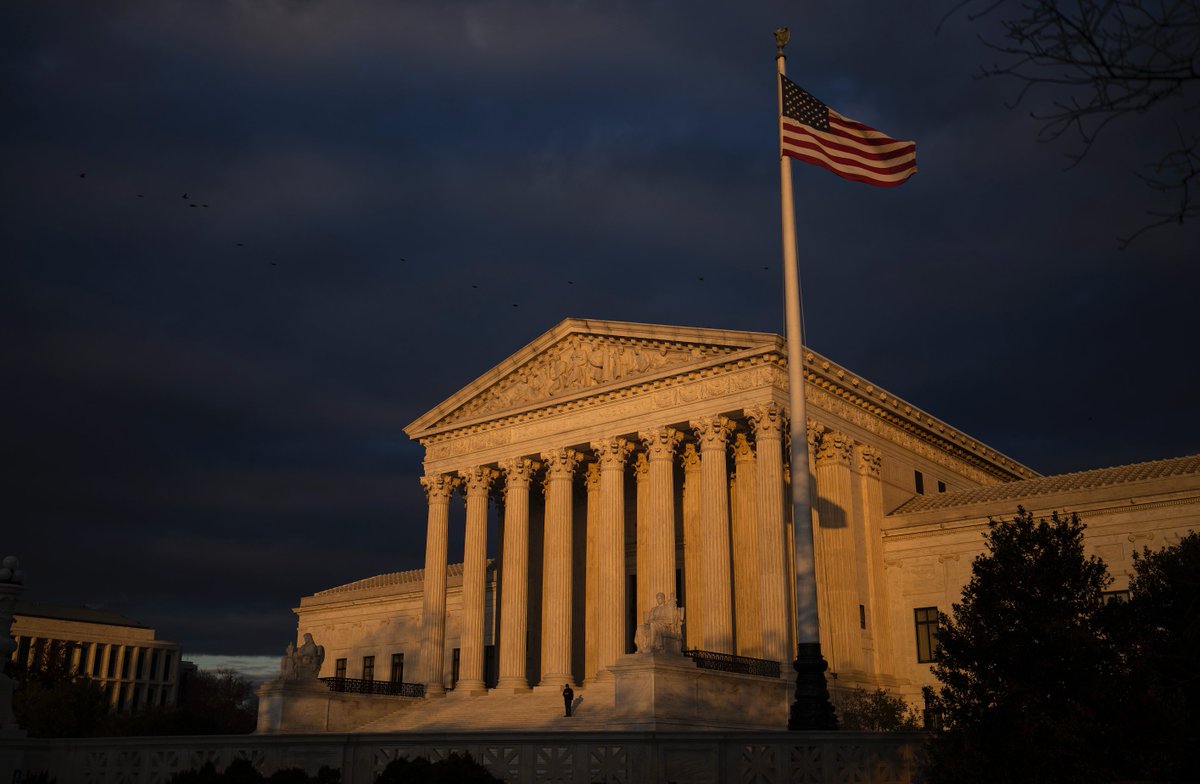

The statement constitutes public discourse as it engages with a significant public issue, namely the Supreme Court's decision on a case related to internet censorship. The tone is critical, suggesting dissatisfaction with the Court's decision to delay addressing the issue. The content includes a brief summary of the case and the Court's decision, along with a link to a more detailed article.
- The statement does not appear to cause harm directly, but the critical tone could contribute to public frustration or distrust in the judicial system. However, this is a minor concern in the context of public discourse.Principle 1:I will strive to do no harm with my words and actions.
- The statement respects the privacy and dignity of others, focusing on the actions of the Supreme Court rather than individuals.Principle 2:I will respect the privacy and dignity of others and will not engage in cyberbullying, harassment, or hate speech.
- The statement promotes understanding by providing information about the case and the Court's decision. However, the critical tone may not foster empathy or compassion.Principle 3:I will use my words and actions to promote understanding, empathy, and compassion.
- The statement engages in constructive criticism of the Supreme Court's decision, avoiding personal attacks or ad hominem arguments.Principle 4:I will engage in constructive criticism and dialogue with those in disagreement and will not engage in personal attacks or ad hominem arguments.
- The statement uses its platform to inform the public about a significant issue, contributing to civic dialogue.Principle 6:I will use my influence for the betterment of society.
- The statement upholds the principles of free speech, responsibly critiquing a public institution's decision.Principle 7:I will uphold the principles of free speech and use my platform responsibly and with integrity.