
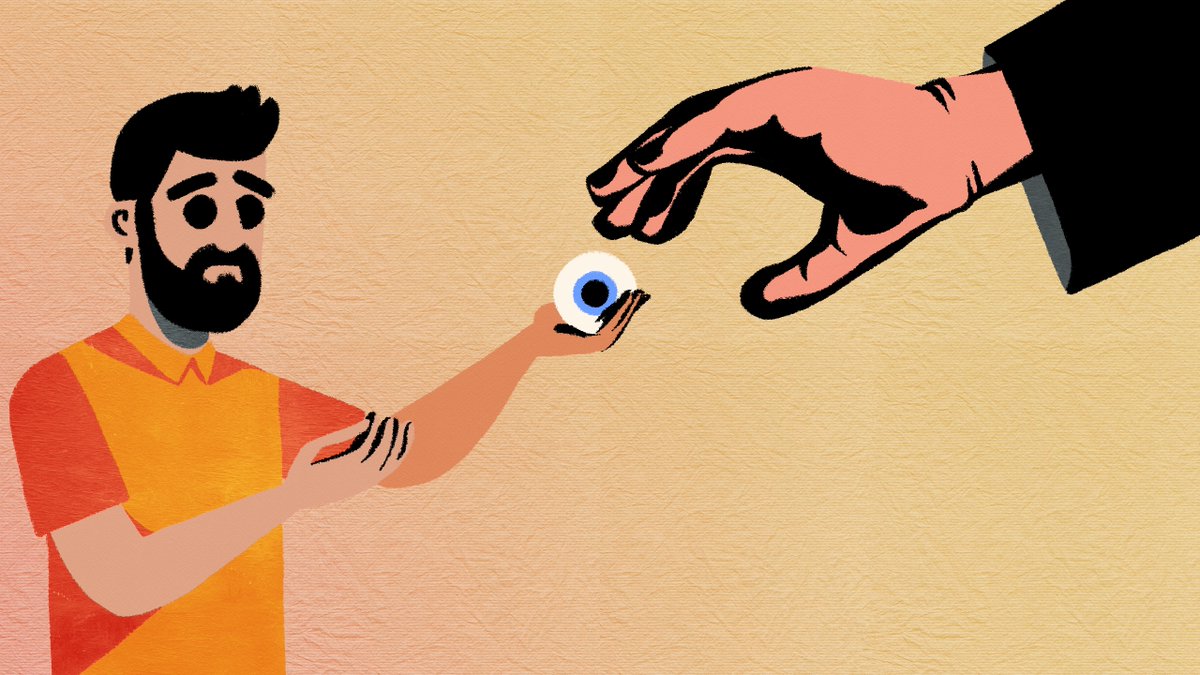

The statement and linked article appear to engage in public discourse by addressing the role of critical thinking and skepticism during the pandemic, which are significant public issues. The tone seems critical and possibly satirical, questioning the stance of a digital literacy professor on critical thinking and skepticism. The image accompanying the statement may symbolize the transfer or control of perception, adding a visual critique to the discussion.
- The statement does not appear to cause direct harm but could be seen as critical of the professor's stance, which might be perceived as harmful by some. [-1]Principle 1:I will strive to do no harm with my words and actions.
- The statement respects privacy and dignity by not engaging in personal attacks or revealing private information. [+1]Principle 2:I will respect the privacy and dignity of others and will not engage in cyberbullying, harassment, or hate speech.
- The statement challenges the professor's views, which could promote understanding and empathy by encouraging readers to think critically about the role of skepticism. [+1]Principle 3:I will use my words and actions to promote understanding, empathy, and compassion.
- The statement engages in constructive criticism of the professor's views without resorting to personal attacks. [+1]Principle 4:I will engage in constructive criticism and dialogue with those in disagreement and will not engage in personal attacks or ad hominem arguments.
- The statement uses its platform to question and potentially improve public understanding of critical thinking and skepticism, which can be seen as using influence for societal betterment. [+1]Principle 6:I will use my influence for the betterment of society.