
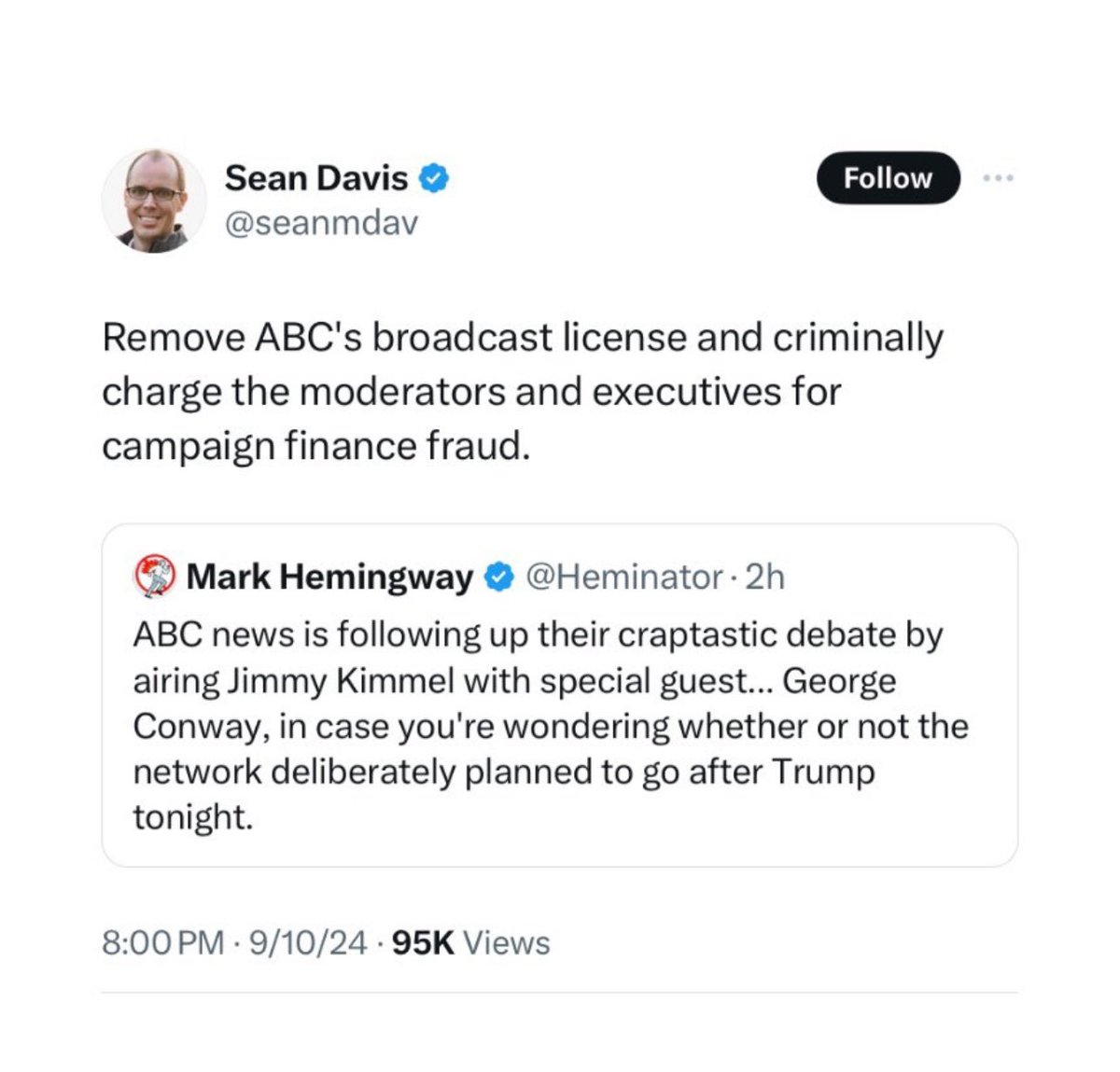

The statement argues against censorship and prosecuting political opponents, suggesting that such actions could be reciprocated by the opposing party, leading to a cycle of retribution. The context includes a conversation about media bias and political partisanship, with a specific example of a call to remove a broadcast license and charge media executives. The tone is cautionary and aims to highlight the potential dangers of setting precedents that could be exploited by political adversaries.
- The statement strives to do no harm by advocating against actions that could escalate political conflict. [+2]Principle 1:I will strive to do no harm with my words and actions.
- It respects the privacy and dignity of others by not engaging in personal attacks or harassment. [+2]Principle 2:I will respect the privacy and dignity of others and will not engage in cyberbullying, harassment, or hate speech.
- The statement promotes understanding and empathy by encouraging a broader perspective on the consequences of political actions. [+2]Principle 3:I will use my words and actions to promote understanding, empathy, and compassion.
- It engages in constructive criticism by addressing the potential negative outcomes of certain political strategies without resorting to personal attacks. [+2]Principle 4:I will engage in constructive criticism and dialogue with those in disagreement and will not engage in personal attacks or ad hominem arguments.
- The statement uses its influence to caution against actions that could harm societal stability and democratic norms. [+2]Principle 6:I will use my influence for the betterment of society.
- It upholds the principles of free speech by arguing against censorship and prosecuting political opponents, promoting a responsible use of power. [+2]Principle 7:I will uphold the principles of free speech and use my platform responsibly and with integrity.