
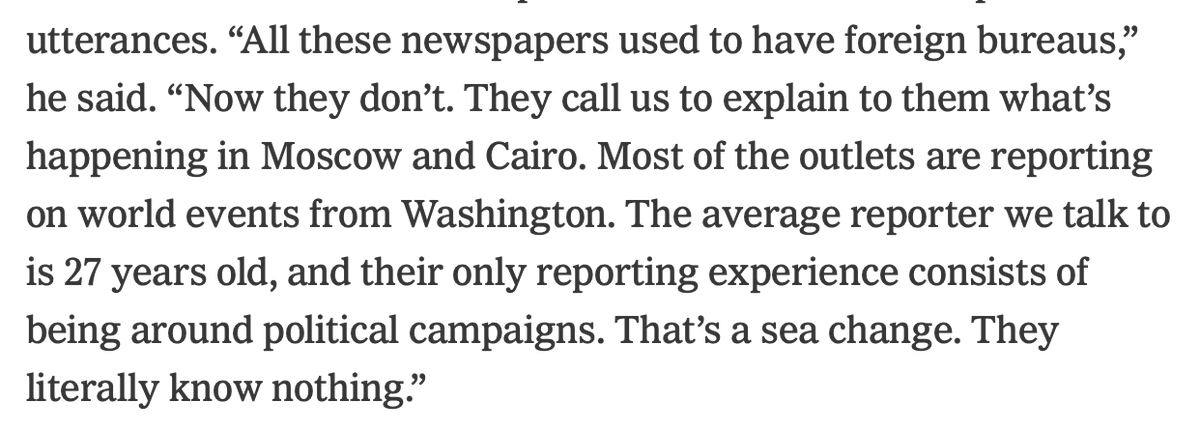

The statement and the surrounding conversation constitute public discourse as they engage in a substantive discussion about the state of journalism, the influence of political talking points, and the quality of reporting. The tone is critical and somewhat accusatory, focusing on the perceived decline in journalistic standards and the influence of political agendas on news reporting.
- The statement aims to highlight issues within journalism, which could be seen as an attempt to improve the field. However, the language used ('literally know nothing') is harsh and could be seen as harmful to young reporters. [-1]Principle 1:I will strive to do no harm with my words and actions.
- The statement does not respect the dignity of young reporters, as it generalizes and undermines their capabilities. It also indirectly criticizes their bosses without constructive suggestions. [-2]Principle 2:I will respect the privacy and dignity of others and will not engage in cyberbullying, harassment, or hate speech.
- The statement does not promote understanding, empathy, or compassion. It is more focused on criticism than on fostering a constructive dialogue. [-2]Principle 3:I will use my words and actions to promote understanding, empathy, and compassion.
- The statement engages in criticism but does not do so constructively. It lacks specific examples or suggestions for improvement, making it more of a personal attack on young reporters and their bosses. [-2]Principle 4:I will engage in constructive criticism and dialogue with those in disagreement and will not engage in personal attacks or ad hominem arguments.
- The statement uses the platform to bring attention to an issue in journalism, which could be seen as an attempt to better society. However, the approach is not entirely responsible or constructive. [+1]Principle 6:I will use my influence for the betterment of society.