

In reply to:
Yonathan Arbel
@ProfArbel
·
640d
Gary Marcus
@GaryMarcus
·
640d
Yonathan Arbel
@ProfArbel
·
640d
Gary Marcus
@GaryMarcus
·
640d
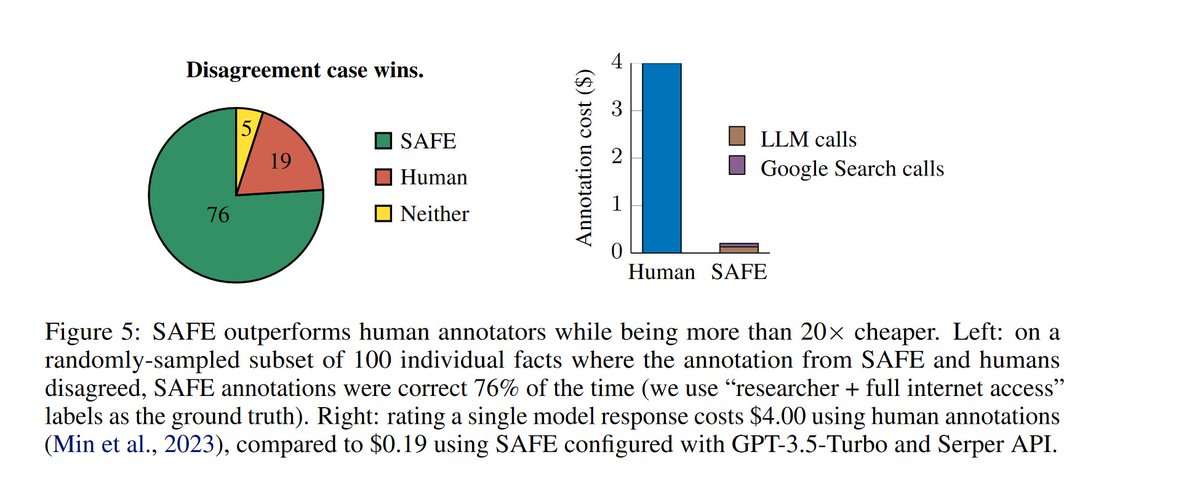
The statement is part of an academic debate on the appropriate terminology and interpretation of research findings related to AI performance in fact-checking. The tone is critical and suggests a need for precision in language to accurately reflect the capabilities of AI compared to human experts. The intent is to advocate for clarity and accuracy in the paper's claims.
- The statement aims to correct potential overstatements in the paper, thus aligning with the principle of doing no harm with words and actions. [+1]Principle 1:I will strive to do no harm with my words and actions.
- The statement respects the dignity of human workers by advocating for a more accurate comparison with AI performance. [+1]Principle 2:I will respect the privacy and dignity of others and will not engage in cyberbullying, harassment, or hate speech.
- The critique is intended to foster a more empathetic understanding of the capabilities of average workers versus experts. [+1]Principle 3:I will use my words and actions to promote understanding, empathy, and compassion.
- The statement engages in constructive criticism of the paper's terminology and findings. [+1]Principle 4:I will engage in constructive criticism and dialogue with those in disagreement and will not engage in personal attacks or ad hominem arguments.
- The statement itself does not acknowledge mistakes but calls for the paper's authors to do so.Principle 5:I will acknowledge and correct my mistakes.
- The statement uses influence to advocate for more accurate and responsible research communication. [+1]Principle 6:I will use my influence for the betterment of society.
- The statement upholds the principles of free speech by engaging in a critical review of the paper's claims responsibly. [+1]Principle 7:I will uphold the principles of free speech and use my platform responsibly and with integrity.