
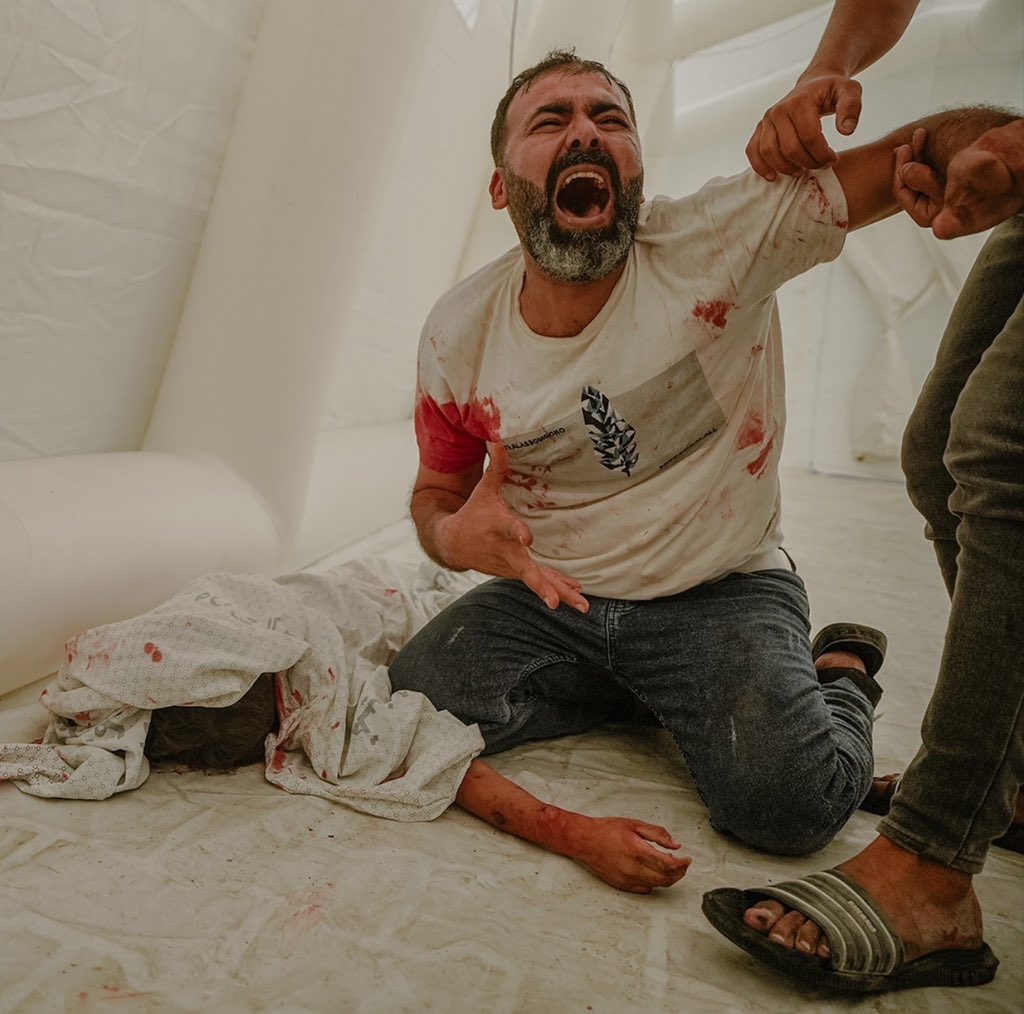

The statement and accompanying image address a significant and ongoing international conflict, comparing the severity of events in Gaza to student protests in America. The statement criticizes the perceived disparity in attention and seriousness given to these issues. The image depicts a man in distress, which intensifies the emotional impact of the statement.
- The statement aims to highlight the gravity of the situation in Gaza and criticize the lack of proportional attention to it, which aligns with the principle of using influence for societal betterment. However, the comparison might indirectly minimize other forms of activism, such as student protests, which could be seen as doing harm.Principle 1:I will strive to do no harm with my words and actions.
- The statement respects the dignity of those suffering by bringing attention to their plight, aligning with the principle of respecting the dignity of others. [+1]Principle 2:I will respect the privacy and dignity of others and will not engage in cyberbullying, harassment, or hate speech.
- The emotional charge of the statement, supported by the distressing image, seeks to evoke empathy and compassion for the victims of the conflict in Gaza. [+1]Principle 3:I will use my words and actions to promote understanding, empathy, and compassion.
- While the statement promotes understanding of the severity of the Gaza situation, the comparison to student protests might not foster constructive dialogue between different activist communities. [-1]Principle 4:I will engage in constructive criticism and dialogue with those in disagreement and will not engage in personal attacks or ad hominem arguments.
- The statement uses its platform to highlight an underreported issue, aligning with the principle of using influence for societal betterment. [+1]Principle 6:I will use my influence for the betterment of society.