
Reposted by Gary Marcus
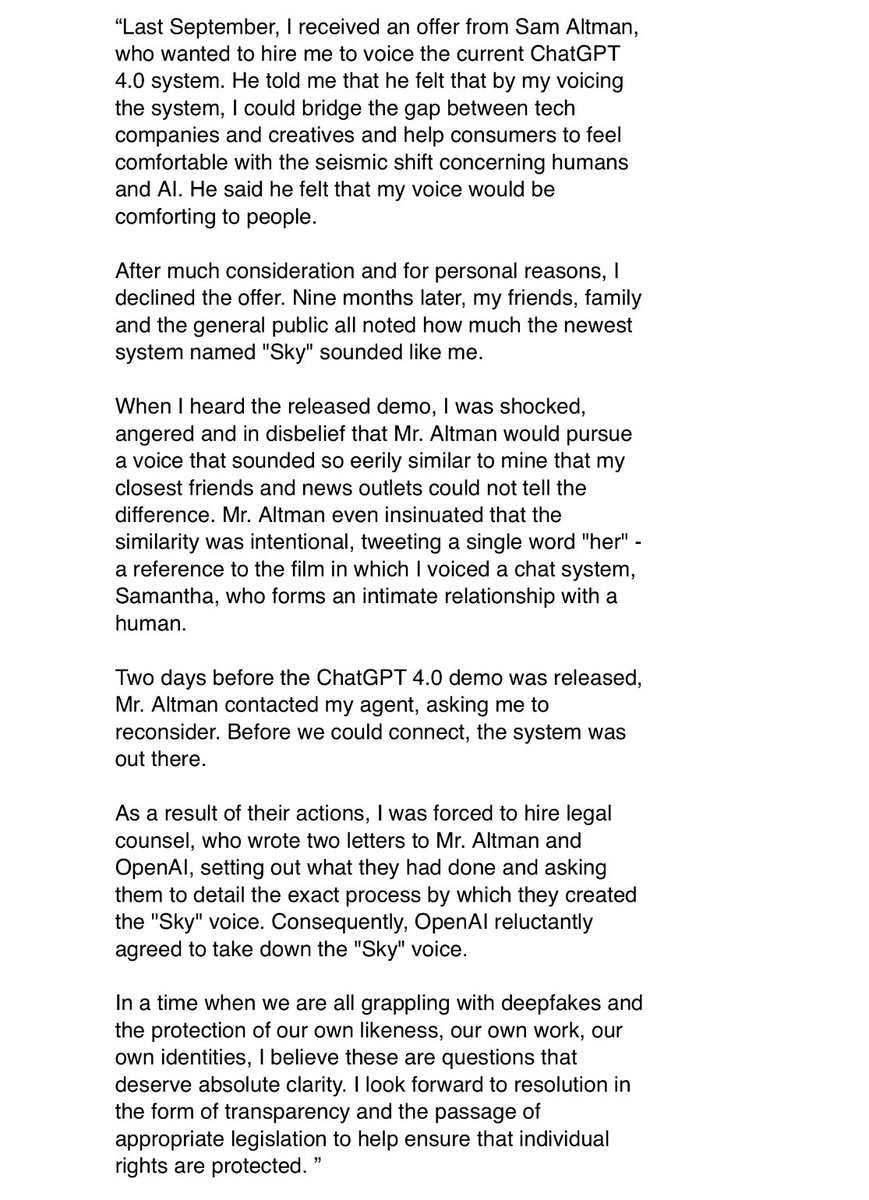

The statement addresses a significant public issue related to the ethical implications of AI development and the use of personal likenesses without consent. It critiques the actions of OpenAI and its leadership, suggesting a lack of judgment and potential ethical violations. The tone is critical and accusatory, aiming to highlight perceived misconduct and its broader implications.
- The statement aims to highlight potential harm caused by the unauthorized use of a person's likeness, aligning with the principle of striving to do no harm. [+1]Principle 1:I will strive to do no harm with my words and actions.
- The statement respects the privacy and dignity of the individual whose likeness was allegedly used without consent, but it criticizes the actions of specific individuals, which could be seen as a personal attack. [-1]Principle 2:I will respect the privacy and dignity of others and will not engage in cyberbullying, harassment, or hate speech.
- The statement promotes understanding and empathy by humanizing the issue of AI ethics and the unauthorized use of personal likenesses. [+1]Principle 3:I will use my words and actions to promote understanding, empathy, and compassion.
- While the statement engages in constructive criticism of OpenAI's actions, it also includes a personal attack on the leadership, which detracts from constructive dialogue. [-1]Principle 4:I will engage in constructive criticism and dialogue with those in disagreement and will not engage in personal attacks or ad hominem arguments.
- The statement uses its platform to advocate for transparency and appropriate legislation, aiming for the betterment of society. [+2]Principle 6:I will use my influence for the betterment of society.