

In reply to:
Gary Marcus
@GaryMarcus
·
619d
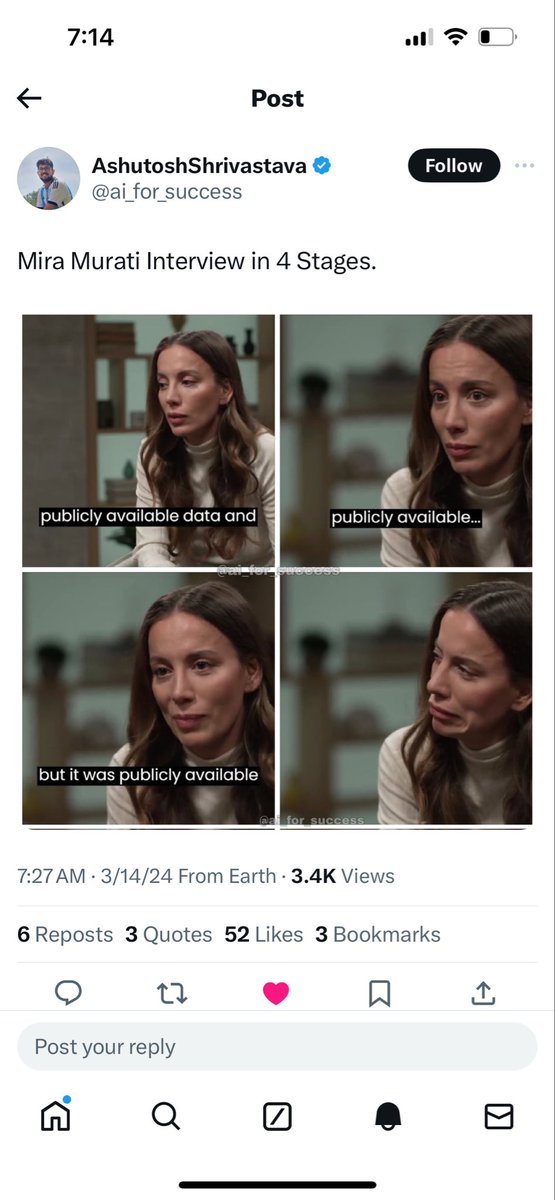
The statement and the accompanying image are part of a broader public discourse about the ethical implications of AI technology, specifically regarding the use of voice patterns that resemble those of real individuals without their consent. The tone of the statement is critical and somewhat sarcastic, suggesting skepticism about the explanations provided by Mira Murati and OpenAI. The content touches on issues of privacy, consent, and the ethical use of AI, which are significant public concerns.
- The statement does not directly cause harm but could be seen as contributing to a negative portrayal of an individual, which might indirectly cause reputational harm. [-1]Principle 1:I will strive to do no harm with my words and actions.
- The statement respects the privacy of individuals involved but questions their professional integrity, which could be seen as a form of public scrutiny rather than harassment.Principle 2:I will respect the privacy and dignity of others and will not engage in cyberbullying, harassment, or hate speech.
- The statement does not promote understanding, empathy, or compassion; instead, it adopts a critical and somewhat mocking tone. [-1]Principle 3:I will use my words and actions to promote understanding, empathy, and compassion.
- The statement engages in criticism but does so in a manner that could be perceived as a personal attack rather than constructive dialogue. [-1]Principle 4:I will engage in constructive criticism and dialogue with those in disagreement and will not engage in personal attacks or ad hominem arguments.
- The statement uses the platform to highlight a significant ethical issue in AI, which can be seen as using influence for societal betterment. [+1]Principle 6:I will use my influence for the betterment of society.