
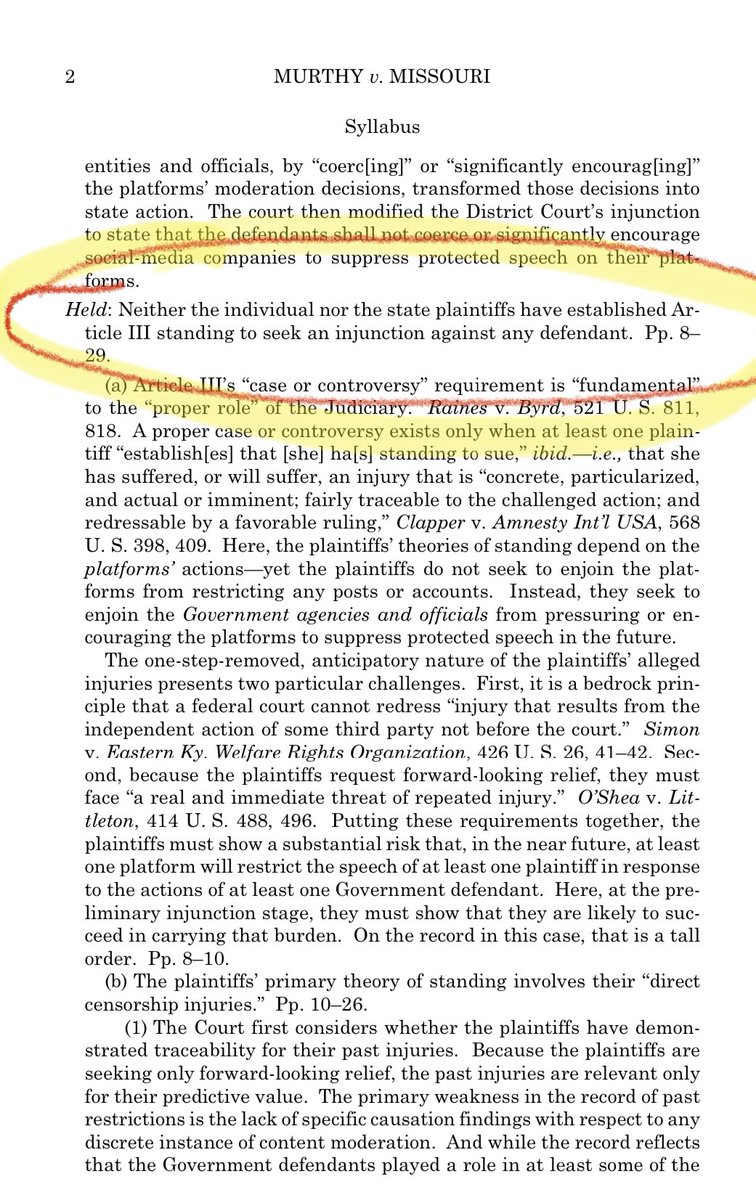

The statement expresses a critical opinion about the 'standing' doctrine and its impact on the Supreme Court's ability to rule on substantive decisions. The tone is sarcastic and critical, suggesting that the doctrine is used to avoid making significant rulings. The image provides context by showing a legal document related to a case where standing was a key issue.
- The statement does not directly cause harm but implies that the standing doctrine is a negative aspect of the judicial process, which could be seen as a critique rather than harmful speech.Principle 1:I will strive to do no harm with my words and actions.
- The statement respects the privacy and dignity of others as it does not target any individual or group for harassment or hate speech. [+1]Principle 2:I will respect the privacy and dignity of others and will not engage in cyberbullying, harassment, or hate speech.
- The statement promotes understanding by bringing attention to a legal principle that affects judicial decisions, though it does so in a critical manner. [+1]Principle 3:I will use my words and actions to promote understanding, empathy, and compassion.
- The statement engages in constructive criticism of the judicial system, though it uses a sarcastic tone which might not foster a productive dialogue.Principle 4:I will engage in constructive criticism and dialogue with those in disagreement and will not engage in personal attacks or ad hominem arguments.