
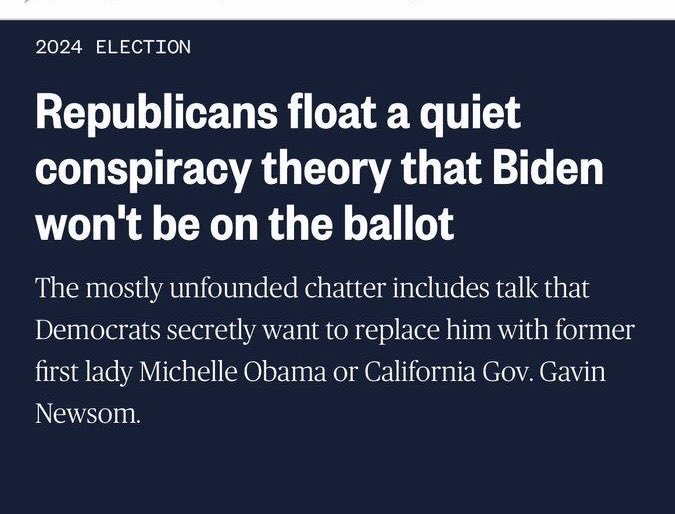

The statement reflects on a past event where the speaker felt criticized by the press and uses a quote from Mark Twain to emphasize the idea that misinformation or false certainty can be problematic. The attached image highlights a political conspiracy theory, which adds context to the speaker's reflection on media and public discourse.
- The statement does not directly cause harm but reflects on a past experience of feeling attacked by the press.Principle 1:I will strive to do no harm with my words and actions.
- The statement respects the privacy and dignity of others, focusing on the speaker's experience and a general quote rather than targeting individuals. [+1]Principle 2:I will respect the privacy and dignity of others and will not engage in cyberbullying, harassment, or hate speech.
- The use of Mark Twain's quote promotes understanding of the dangers of misinformation, aligning with the principle of promoting empathy and compassion. [+1]Principle 3:I will use my words and actions to promote understanding, empathy, and compassion.
- The statement does not engage in personal attacks but rather reflects on a broader issue of media criticism and misinformation. [+1]Principle 4:I will engage in constructive criticism and dialogue with those in disagreement and will not engage in personal attacks or ad hominem arguments.
- The statement does not acknowledge or correct any mistakes but reflects on a past event.Principle 5:I will acknowledge and correct my mistakes.
- The statement uses the speaker's platform to highlight issues of media criticism and misinformation, which can contribute to public discourse. [+1]Principle 6:I will use my influence for the betterment of society.
- The statement upholds free speech principles and uses the platform responsibly to discuss issues of public concern. [+1]Principle 7:I will uphold the principles of free speech and use my platform responsibly and with integrity.