

In reply to:
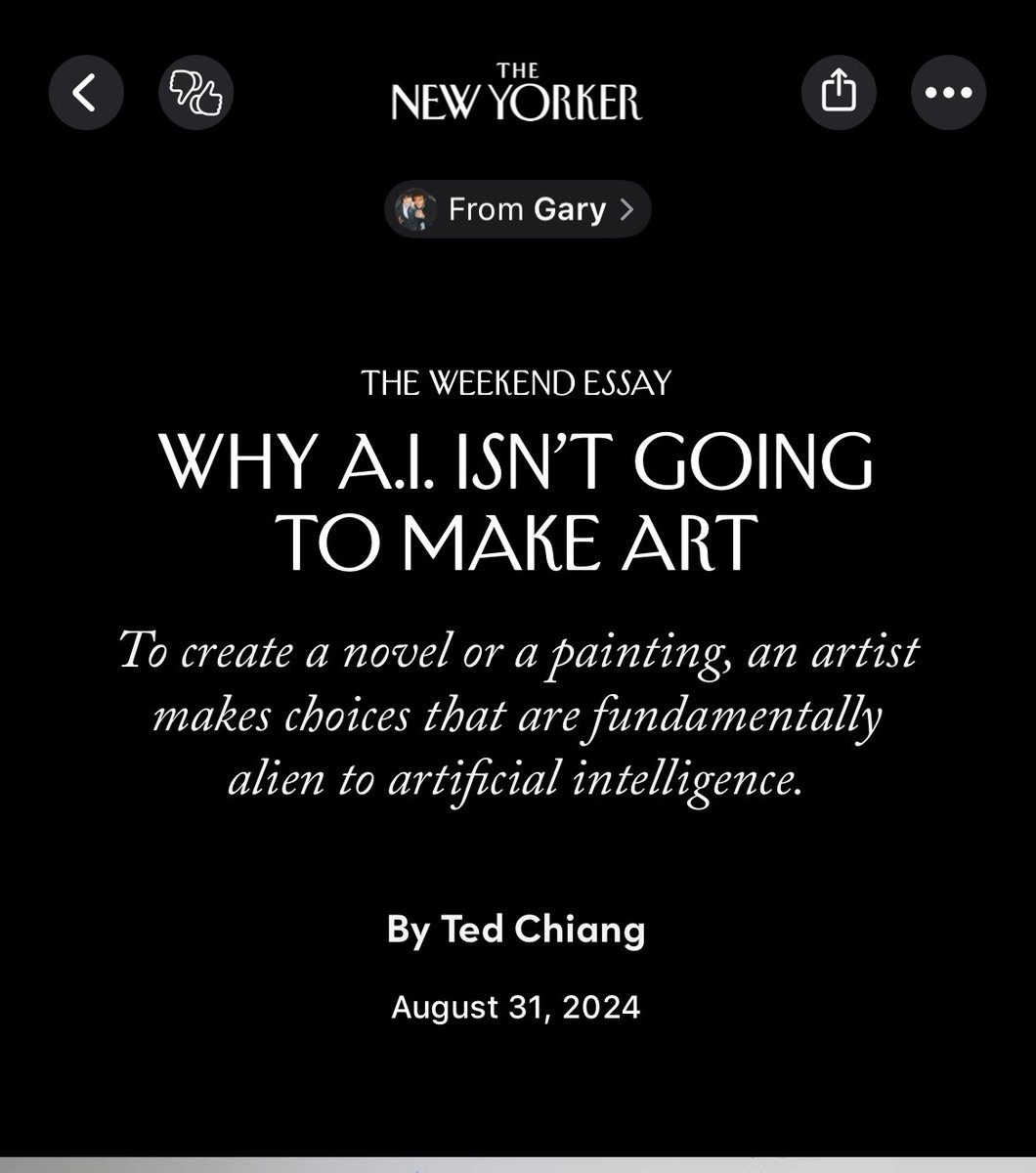
The statement and linked article constitute public discourse as they engage with the societal issue of artificial intelligence and its impact on art and creativity. The statement by Ted Chiang, as summarized, argues that AI has profound limitations that prevent it from truly replacing human art-making. This touches on several principles related to public discourse.
- The statement strives to do no harm by addressing misconceptions about AI without attacking individuals or groups. [+2]Principle 1:I will strive to do no harm with my words and actions.
- The statement promotes understanding by explaining the limitations of AI in the context of art, fostering a more nuanced view of the technology. [+2]Principle 3:I will use my words and actions to promote understanding, empathy, and compassion.
- The statement engages in constructive criticism of the hype surrounding AI, focusing on its limitations rather than attacking proponents of AI. [+2]Principle 4:I will engage in constructive criticism and dialogue with those in disagreement and will not engage in personal attacks or ad hominem arguments.
- The statement uses the author's influence to contribute to a more informed public dialogue about AI and its capabilities. [+2]Principle 6:I will use my influence for the betterment of society.