
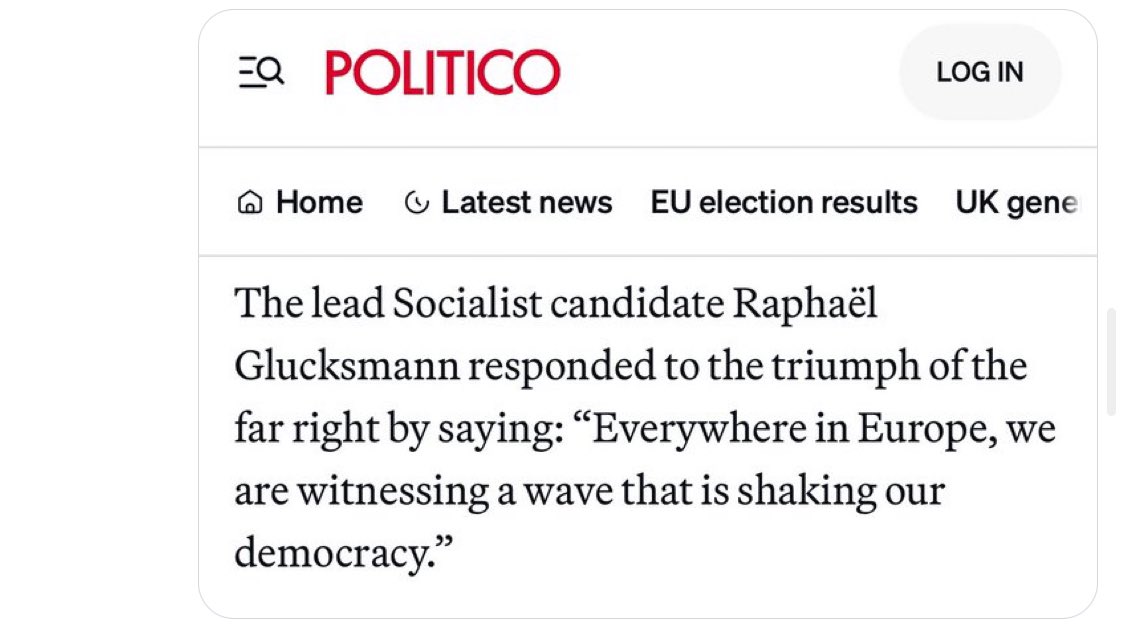

The statement and the accompanying conversation engage in public discourse by addressing the implications of election results on democracy. The tone is sarcastic and critical, suggesting that the voters themselves are a threat to democracy, which can be seen as a critique of the democratic process or the outcomes it produces. The image provides context by showing a political figure's concern about the rise of the far right in Europe.
- The statement uses sarcasm, which can be seen as a form of humor, but it may also be interpreted as dismissive or disrespectful towards voters. This could potentially cause harm by undermining the legitimacy of democratic participation. [-1]Principle 1:I will strive to do no harm with my words and actions.
- The statement does not engage in direct harassment or hate speech, but it does imply a negative judgment on voters, which could be seen as disrespectful to their dignity. [-1]Principle 2:I will respect the privacy and dignity of others and will not engage in cyberbullying, harassment, or hate speech.
- The statement does not promote understanding, empathy, or compassion. Instead, it uses humor to critique a serious issue, which may not foster constructive dialogue. [-1]Principle 3:I will use my words and actions to promote understanding, empathy, and compassion.
- The statement does not engage in constructive criticism or dialogue. It uses sarcasm to make a point, which can be seen as a form of personal attack on the voters' choices rather than a substantive critique of the issues at hand. [-1]Principle 4:I will engage in constructive criticism and dialogue with those in disagreement and will not engage in personal attacks or ad hominem arguments.