
Reposted by Rashida Tlaib
Mohammed Khader
@MohammedKhaderr
·
547d
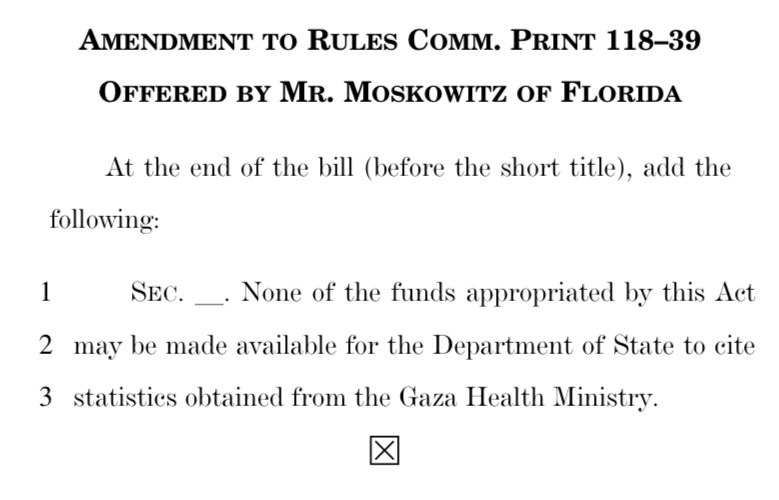

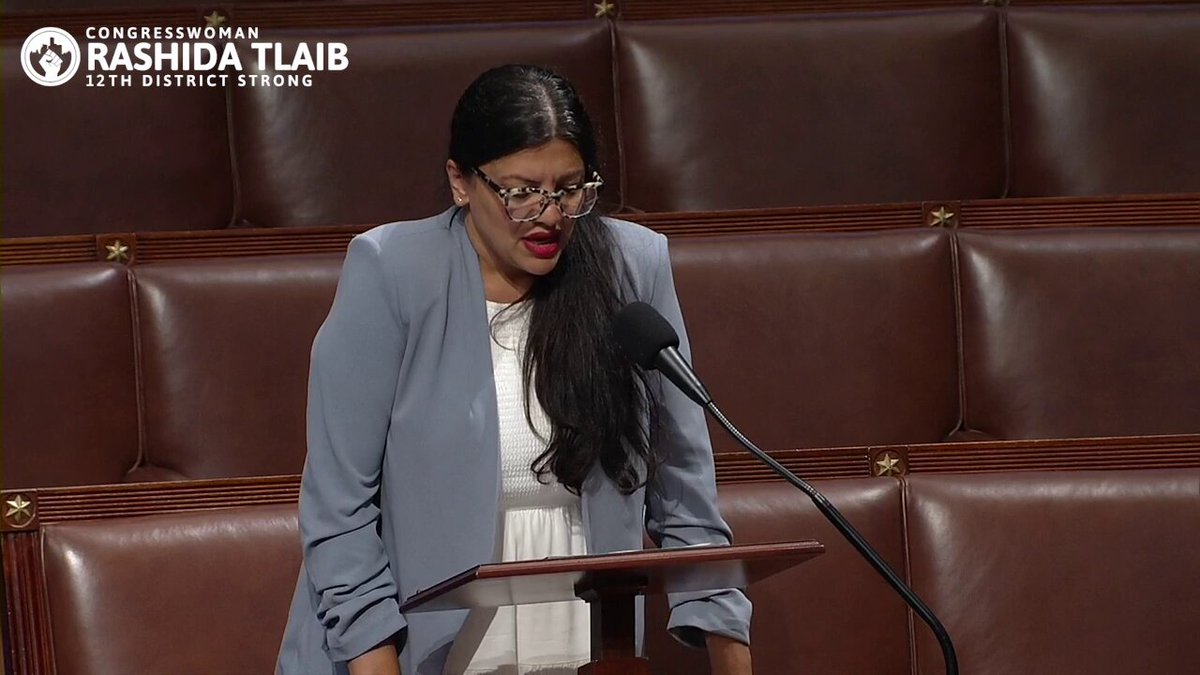
The statement by Rep. Rashida Tlaib addresses a significant public issue, specifically the recognition and acknowledgment of Palestinian casualties in Gaza. The tone is accusatory and critical, highlighting perceived anti-Palestinian racism within the legislative chamber. The statement aims to bring attention to what the speaker views as a deliberate erasure of Palestinian existence and suffering. The linked conversation and image provide context, indicating that the House of Representatives is considering an amendment that would prohibit the State Department from citing statistics from the Gaza Health Ministry, which the speaker interprets as genocide denial.
- The statement aims to highlight and address harm, specifically the erasure of Palestinian casualties, which aligns with the principle of striving to do no harm. However, the accusatory tone may contribute to divisiveness. [+1]Principle 1:I will strive to do no harm with my words and actions.
- The statement respects the privacy and dignity of others by focusing on a public issue rather than targeting individuals. However, the strong language could be seen as contributing to a hostile environment. [-1]Principle 2:I will respect the privacy and dignity of others and will not engage in cyberbullying, harassment, or hate speech.
- The statement promotes understanding and empathy for Palestinians by highlighting their suffering and the perceived erasure of their existence. However, the accusatory tone may hinder constructive dialogue. [+1]Principle 3:I will use my words and actions to promote understanding, empathy, and compassion.
- The statement engages in criticism of colleagues, which is a form of public discourse. However, the tone is accusatory and could be seen as a personal attack, which does not align with constructive criticism and dialogue. [-1]Principle 4:I will engage in constructive criticism and dialogue with those in disagreement and will not engage in personal attacks or ad hominem arguments.
- The statement uses the speaker's platform to bring attention to a significant issue, which aligns with using influence for the betterment of society. However, the tone may polarize rather than unite. [+1]Principle 6:I will use my influence for the betterment of society.