
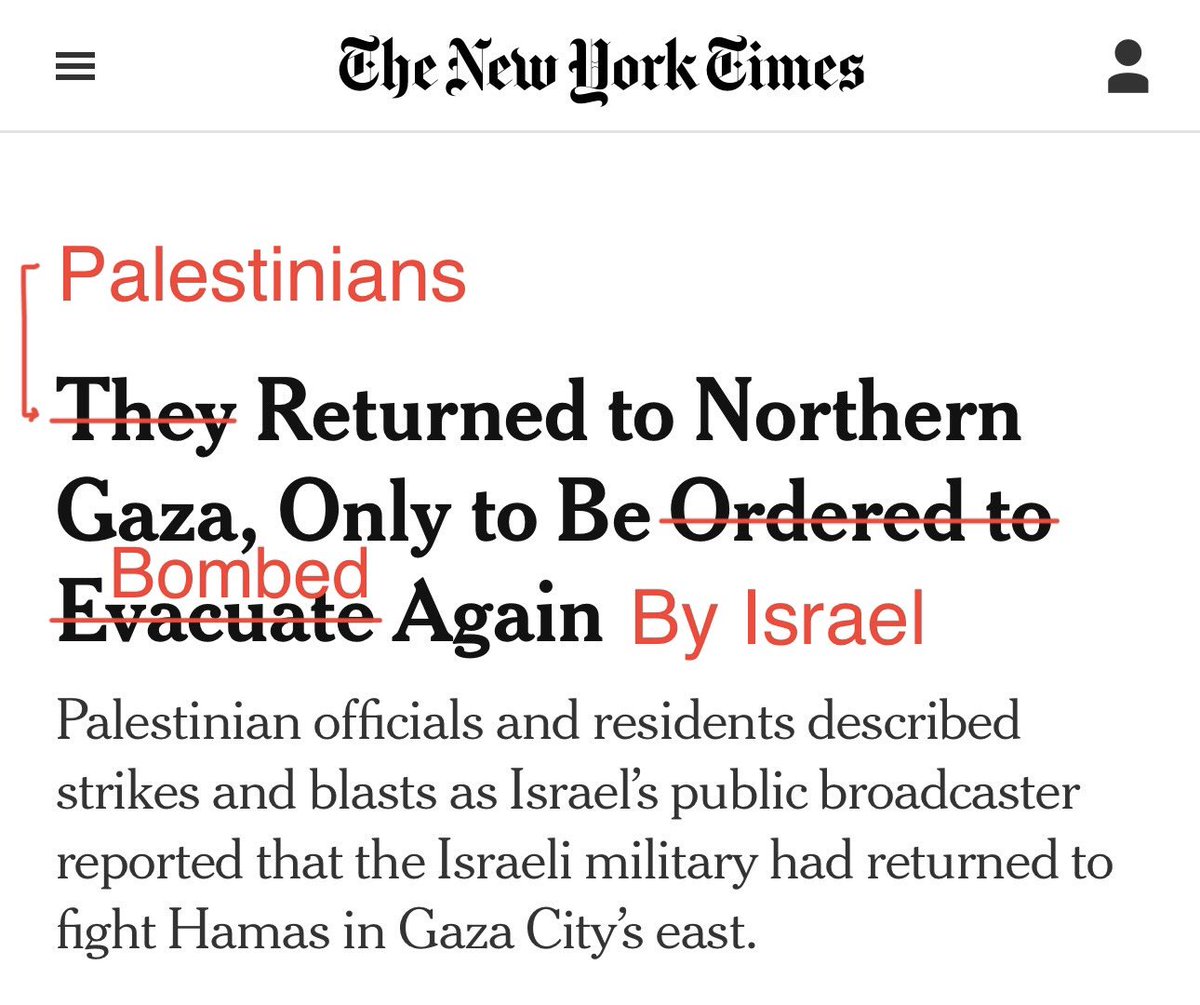

The statement and accompanying image engage in public discourse by addressing a significant and sensitive geopolitical issue involving the Israeli-Palestinian conflict. The edited headline suggests a critique of the original reporting, implying that the situation is more severe than initially presented. The tone is critical and aims to highlight perceived bias or underreporting in the media.
- The statement could be seen as aiming to do harm by potentially inflaming tensions between groups, but it also seeks to correct what it perceives as a misrepresentation, which can be seen as a form of harm reduction. [-1]Principle 1:I will strive to do no harm with my words and actions.
- The statement respects the privacy and dignity of individuals by focusing on the actions of states and media rather than personal attacks. [+1]Principle 2:I will respect the privacy and dignity of others and will not engage in cyberbullying, harassment, or hate speech.
- The statement promotes understanding and empathy by attempting to bring attention to the severity of the situation for Palestinians, though it does so in a confrontational manner. [+1]Principle 3:I will use my words and actions to promote understanding, empathy, and compassion.
- The statement engages in constructive criticism of media reporting, though it could be seen as a personal attack on the credibility of the New York Times. [-1]Principle 4:I will engage in constructive criticism and dialogue with those in disagreement and will not engage in personal attacks or ad hominem arguments.
- The statement uses its platform to bring attention to a significant issue, aiming for the betterment of society by advocating for more accurate reporting. [+1]Principle 6:I will use my influence for the betterment of society.
- The statement upholds free speech principles by engaging in critique, though the confrontational tone may challenge the integrity of the discourse.Principle 7:I will uphold the principles of free speech and use my platform responsibly and with integrity.