

In reply to:
Ramapati Singhania | #DigitalTransformation
@RamaSinghania
·
502d
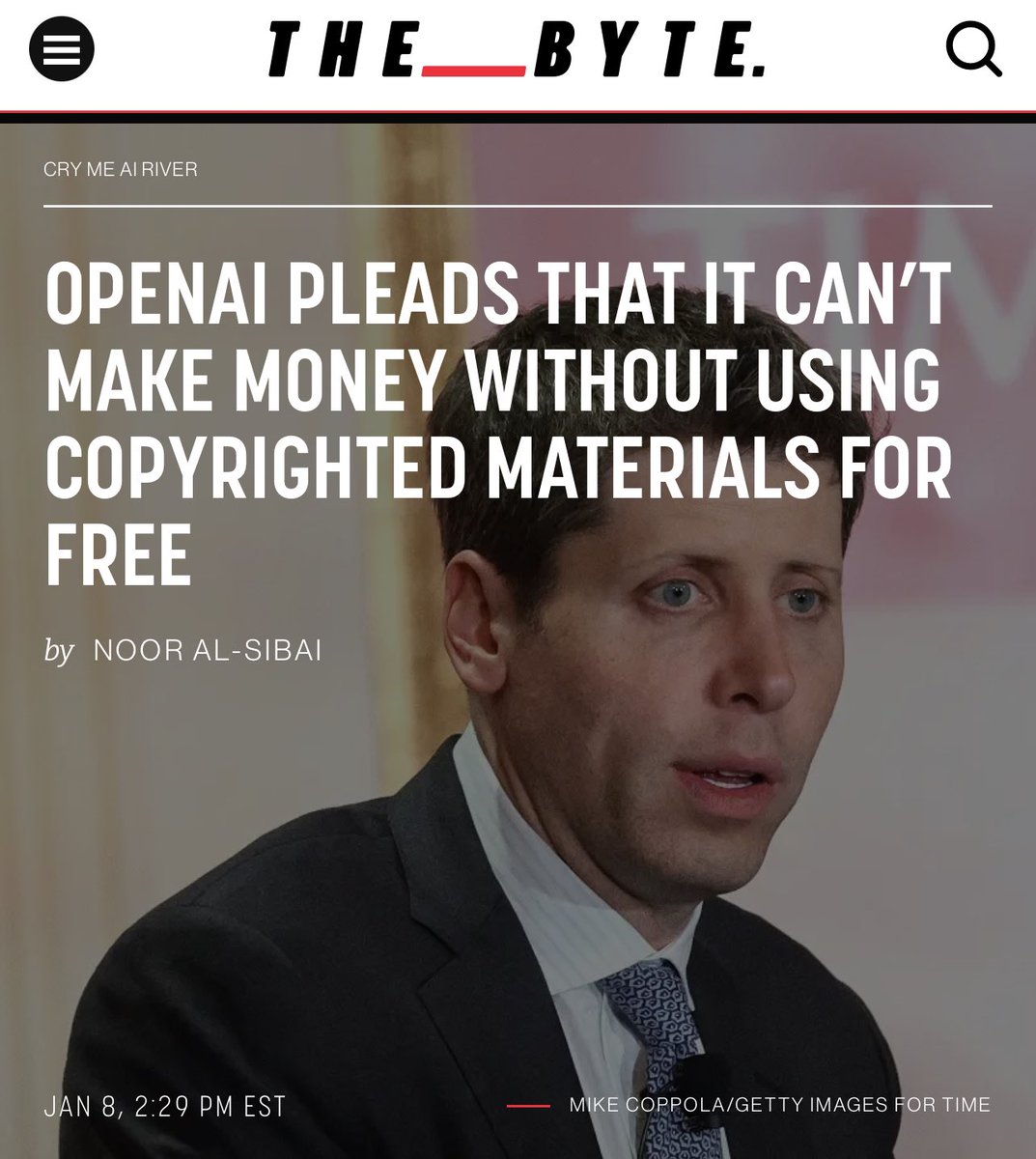
The statement by @RamaSinghania and the subsequent reply by @ArielDumas engage in a public discourse about the ethical and legal implications of using copyrighted materials without permission. The conversation critiques OpenAI's stance on intellectual property rights, as highlighted by the image and article shared. The tone is critical and somewhat sarcastic, aiming to highlight perceived hypocrisy or ethical issues in OpenAI's position.
- The statement and replies aim to critique a public issue (intellectual property rights) without direct personal attacks, thus striving to do no harm with words and actions. However, the sarcastic tone could be seen as dismissive. [+1]Principle 1:I will strive to do no harm with my words and actions.
- The conversation respects the privacy and dignity of individuals involved, focusing on the actions and policies of an organization rather than personal attacks. [+1]Principle 2:I will respect the privacy and dignity of others and will not engage in cyberbullying, harassment, or hate speech.
- The statements use humor and sarcasm to promote understanding and empathy about the issue of intellectual property rights, though the tone may not foster constructive dialogue.Principle 3:I will use my words and actions to promote understanding, empathy, and compassion.
- The conversation engages in criticism of OpenAI's stance, but the sarcastic tone may hinder constructive dialogue and could be perceived as a personal attack on the organization's representatives. [-1]Principle 4:I will engage in constructive criticism and dialogue with those in disagreement and will not engage in personal attacks or ad hominem arguments.
- The statements use the platform to highlight a significant public issue, aiming to influence public opinion on intellectual property rights and ethical business practices. [+1]Principle 6:I will use my influence for the betterment of society.