
Reposted by Gary Marcus
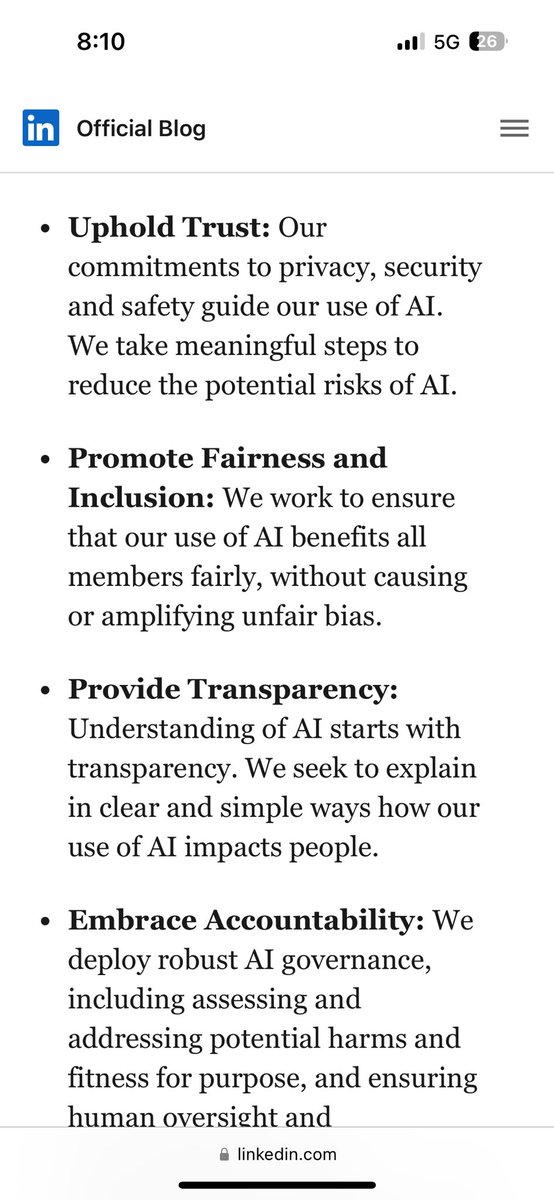


The statement criticizes LinkedIn for allegedly not adhering to its own Responsible AI Principles, specifically regarding trust, privacy, transparency, and accountability. The tone is confrontational and accusatory, suggesting that LinkedIn's principles are merely for marketing purposes and not genuinely implemented. The statement is part of a public discourse on corporate responsibility and ethical AI practices.
- The statement aims to hold LinkedIn accountable for its actions, which aligns with the principle of doing no harm. However, the confrontational tone could be seen as potentially harmful. [-1]Principle 1:I will strive to do no harm with my words and actions.
- The statement respects the privacy and dignity of others by focusing on corporate actions rather than personal attacks. It does not engage in cyberbullying, harassment, or hate speech. [+1]Principle 2:I will respect the privacy and dignity of others and will not engage in cyberbullying, harassment, or hate speech.
- The statement promotes understanding and empathy by highlighting the importance of consent and ethical AI practices. However, the accusatory tone may detract from fostering empathy and compassion.Principle 3:I will use my words and actions to promote understanding, empathy, and compassion.
- The statement engages in constructive criticism by pointing out perceived inconsistencies between LinkedIn's stated principles and actions. However, the use of terms like 'marketing BS' could be seen as a personal attack on the company's integrity. [-1]Principle 4:I will engage in constructive criticism and dialogue with those in disagreement and will not engage in personal attacks or ad hominem arguments.
- The statement uses its platform to advocate for better corporate practices, aiming for the betterment of society by promoting ethical AI usage. [+1]Principle 6:I will use my influence for the betterment of society.